컬렉션 보기
작품과 기법, 복제품과 함께 사는 법에 관한 글.
Water Lilies
The pond at Giverny, painted for thirty years. · 4 works
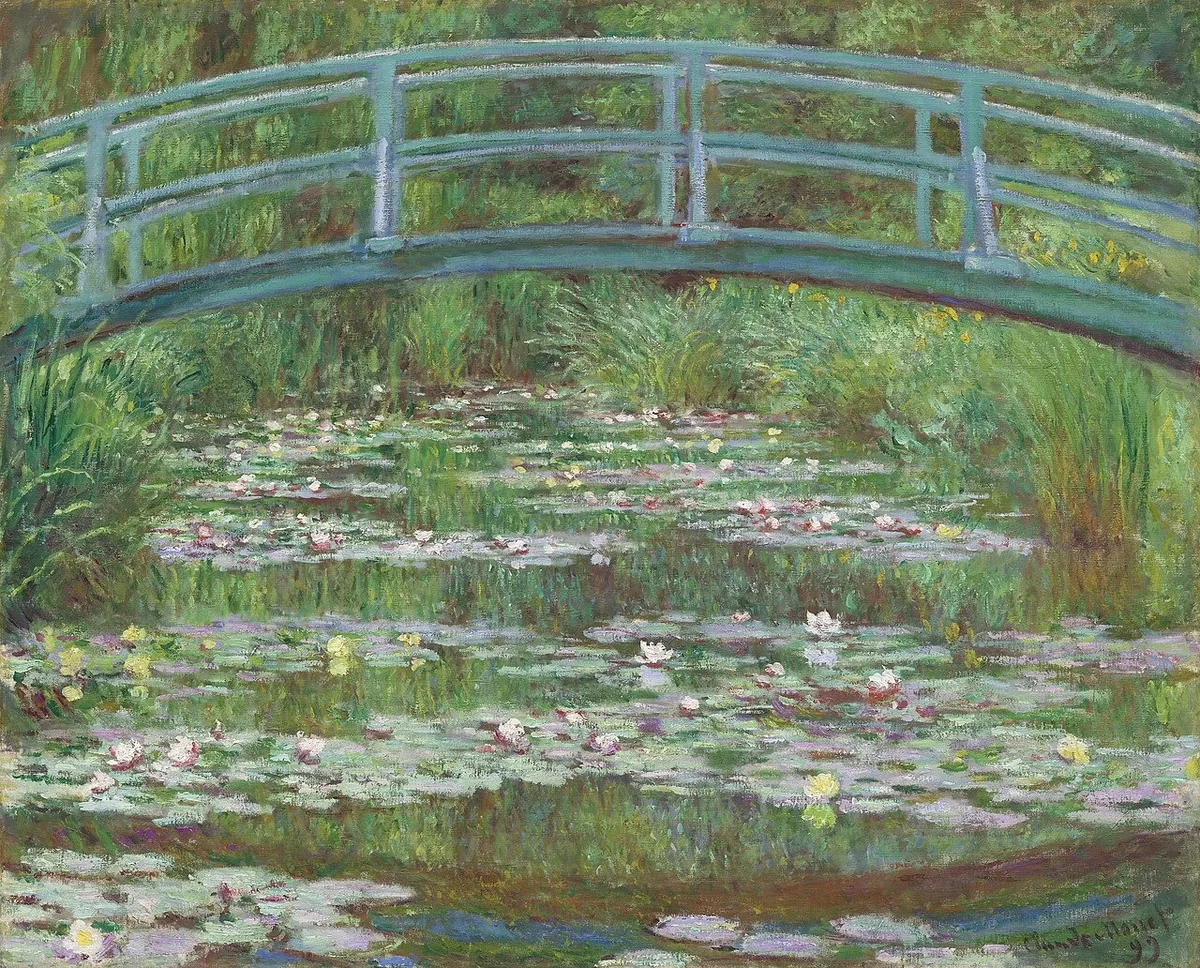
The Japanese Footbridge
1899 Le Pont japonais · 日本桥 The wooden bridge Monet built over his lily pond, painted from the bank at eye level. It is one of the first pictures in which the garden he designed becomes the entire subject of the painting. National Gallery of Art, Washington · 2 prints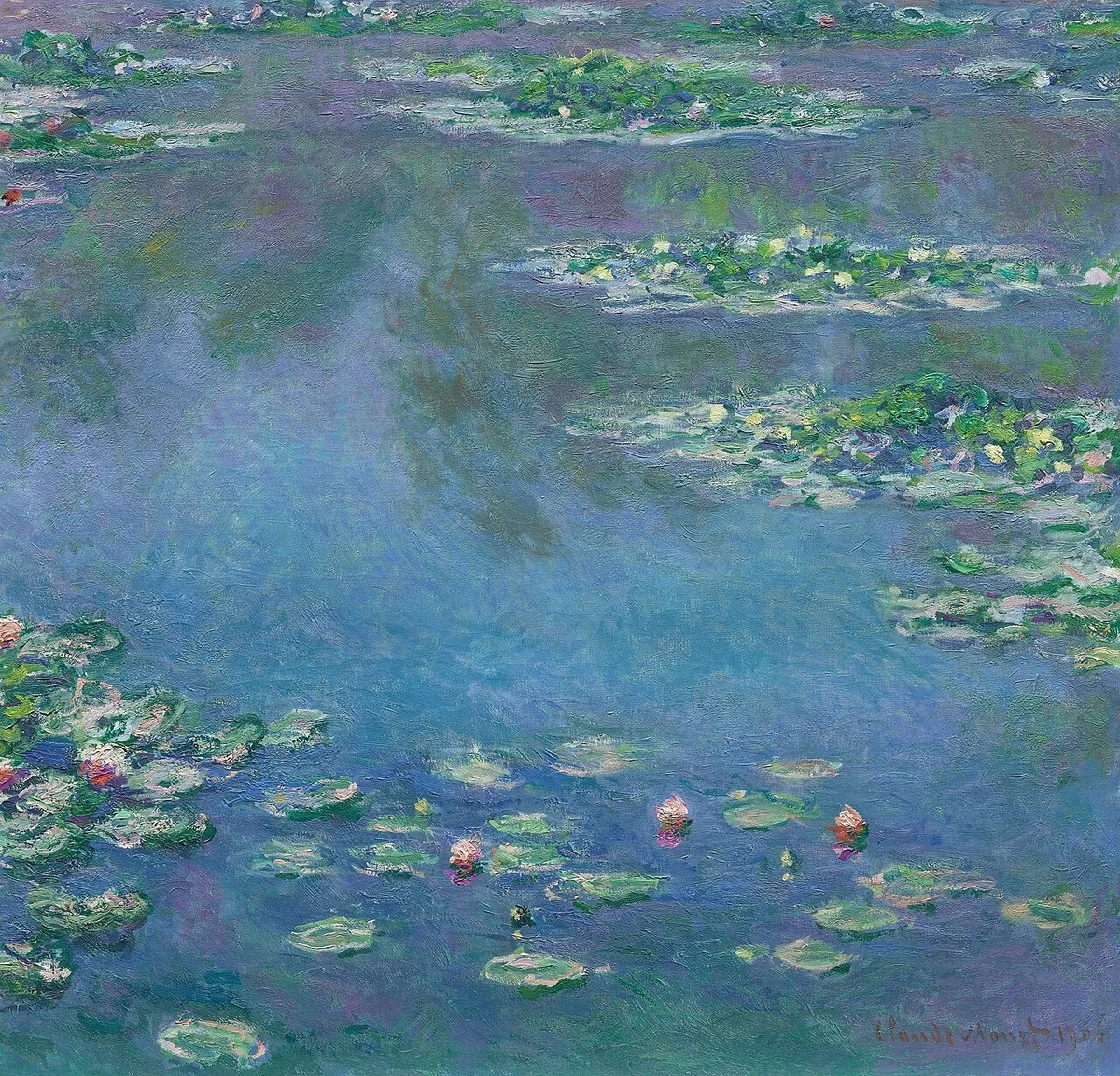
Water Lilies
1906 Nymphéas · 睡莲 By 1906 Monet had stopped painting the banks of the pond and started painting only the surface of the water. There is no horizon and no shore, only reflections, and the viewer is placed directly above the pond. Art Institute of Chicago · 2 prints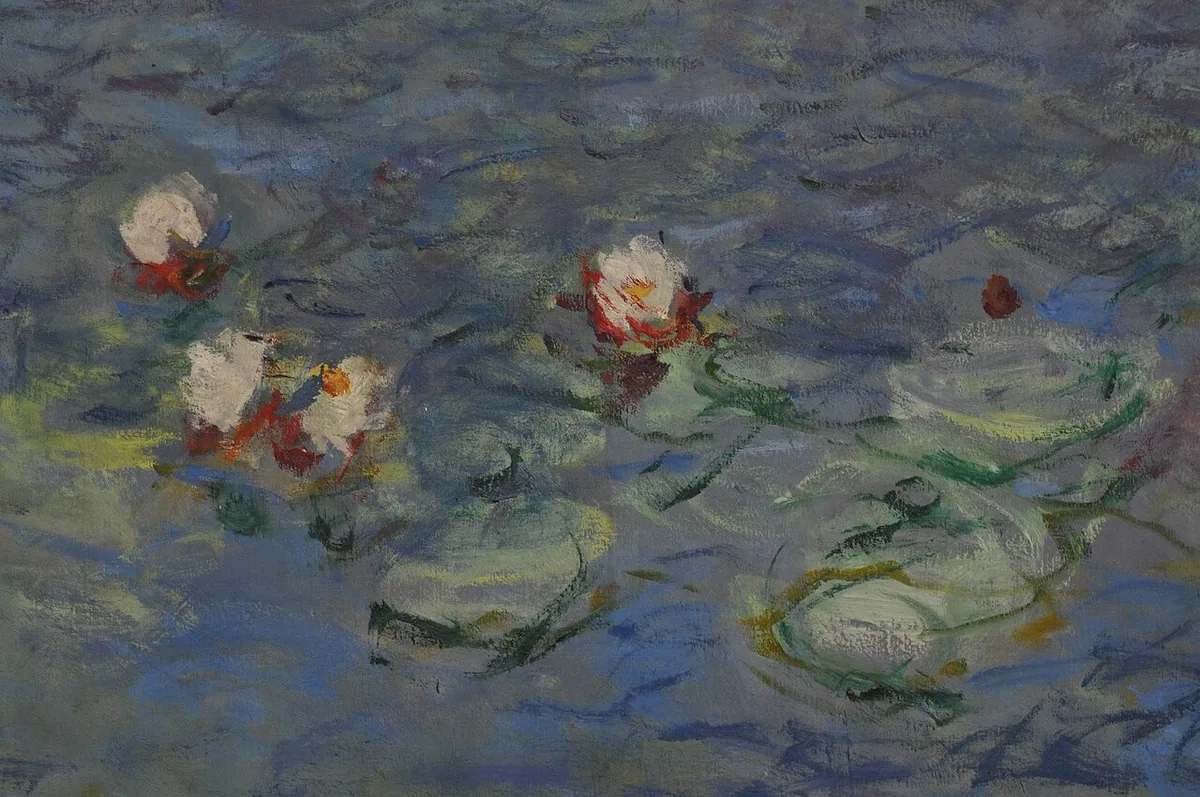
Water Lilies (Grandes Décorations)
1926 Les Nymphéas · 橘园睡莲 The eight large panels Monet worked on for the last decade of his life, installed in two oval rooms at the Orangerie according to his own instructions. They were conceived as a place to stand inside rather than a picture to look at. Musée de l'Orangerie, Paris · 2 prints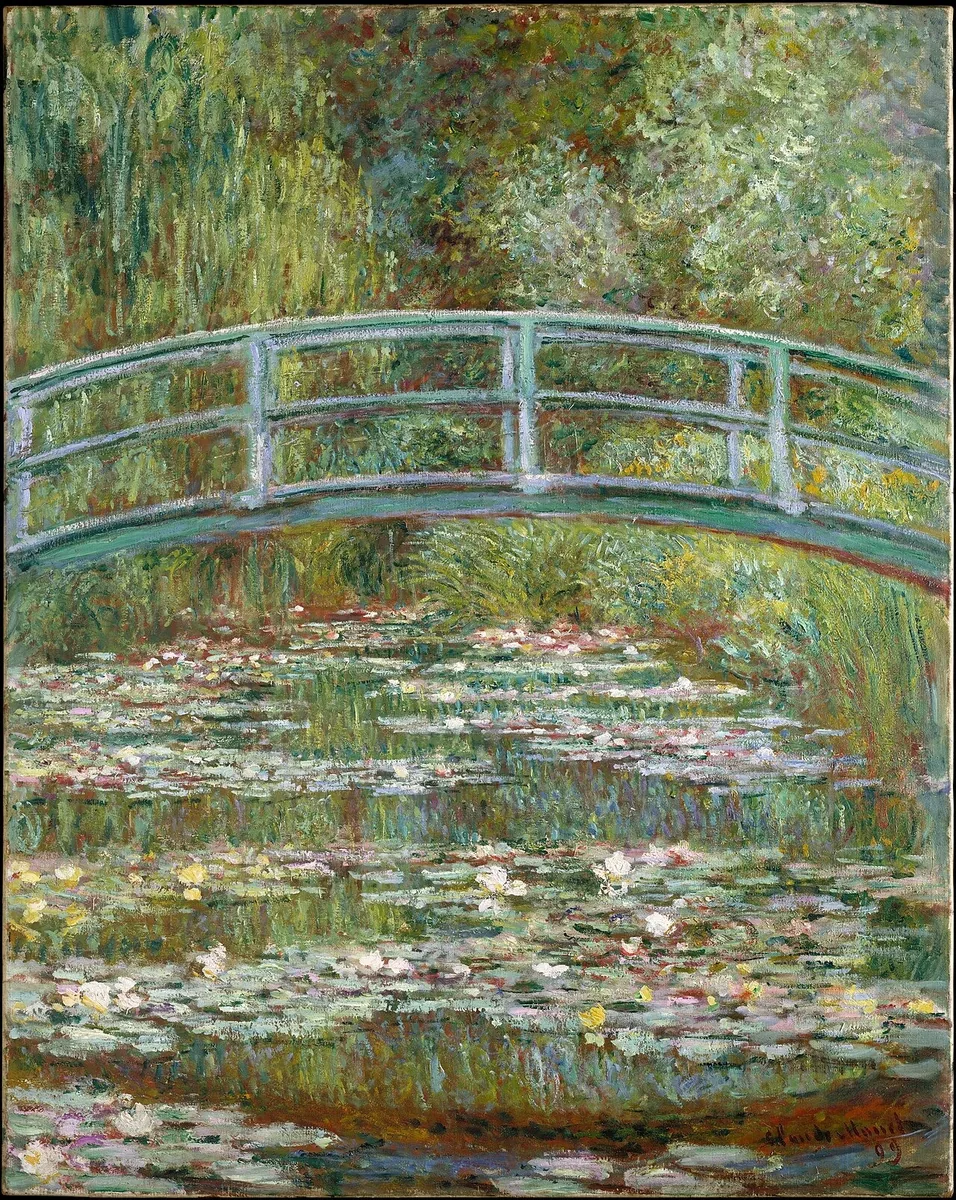
Bridge over a Pond of Water Lilies
1899 Pont sur le bassin aux nymphéas · 睡莲池上的桥 A vertical version of the bridge motif, with the water and the planting filling almost the whole canvas. The bridge is a frame rather than a subject — something to look through. The Metropolitan Museum of Art, New York · 2 printsHaystacks
Light on a field, twenty-five times over. · 2 works
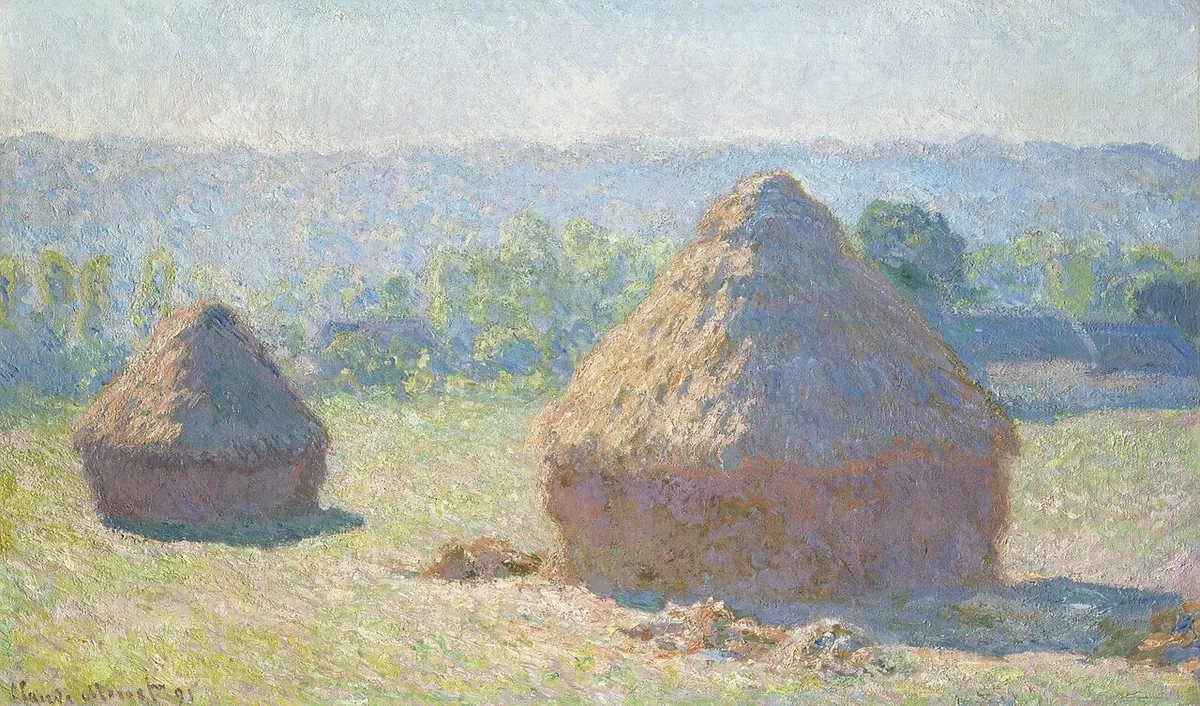
Haystacks (Meules)
1891 Meules · 干草堆 Monet worked on up to fifteen canvases at once in the fields behind his house, following the same stack from dawn to dusk across weeks. The subject is not the haystack. It is the fact that the light on it never stops changing. Art Institute of Chicago · 2 prints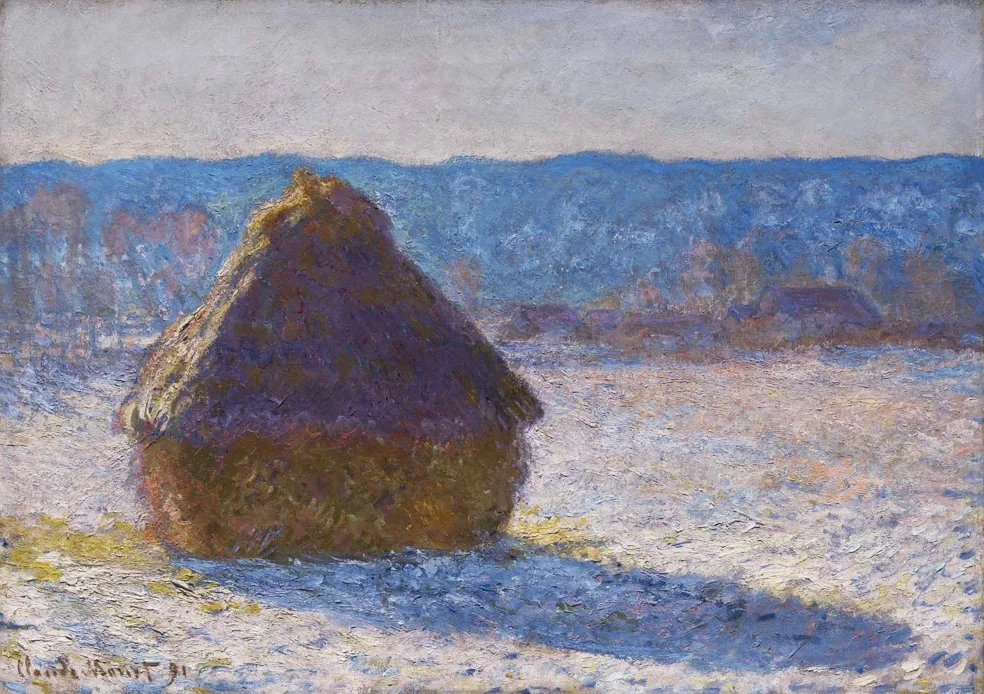
Grainstacks in the Morning, Snow Effect
1891 Meules, effet de neige · 雪景干草堆 The same stack, in snow, in the morning. Where the summer pictures are warm and dry, this one is built almost entirely from cold violets and pinks, and the stack becomes a shape rather than an object. Museum of Fine Arts, Boston · 2 printsRouen Cathedral
The same façade, every hour of the day. · 2 works
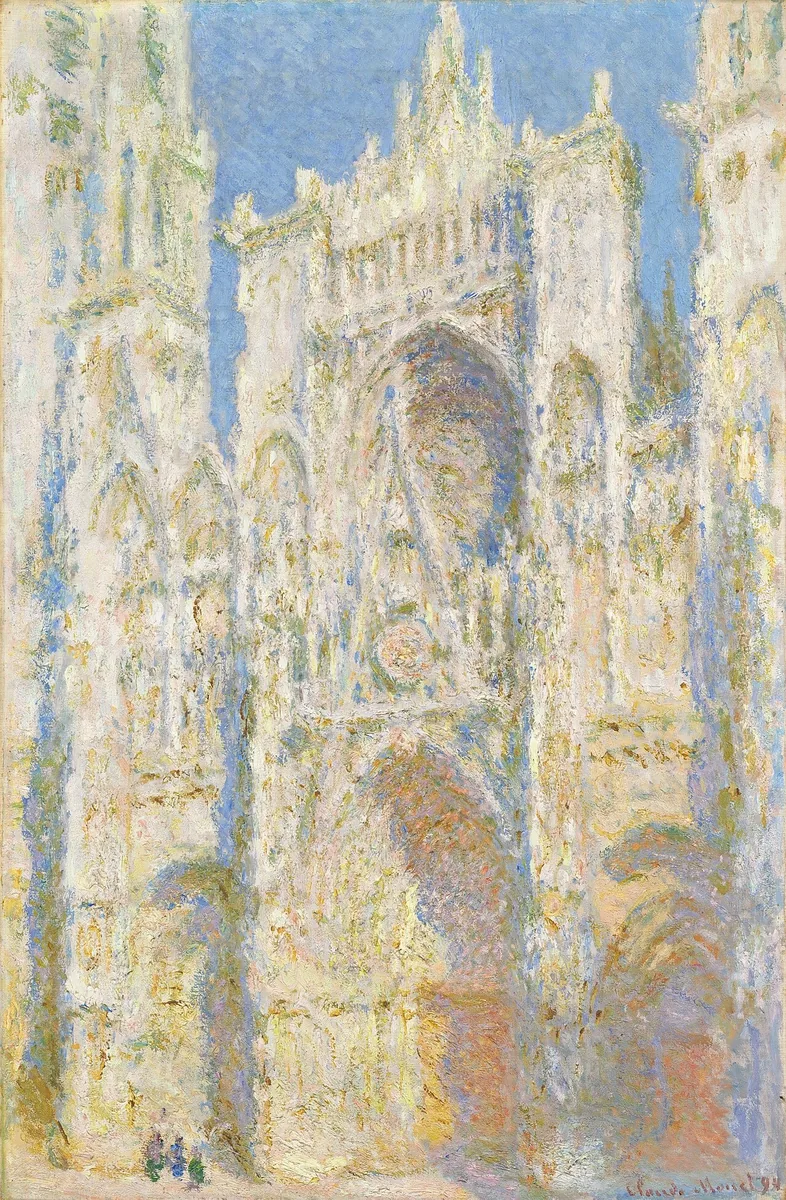
Rouen Cathedral, West Façade, Sunlight
1894 La Cathédrale de Rouen, plein soleil · 鲁昂大教堂·阳光 Monet took rooms opposite the cathedral and painted the same stone face more than thirty times over two winters, waiting for specific weather. The stone stops being stone: it becomes a surface that the light is doing something to. National Gallery of Art, Washington · 2 prints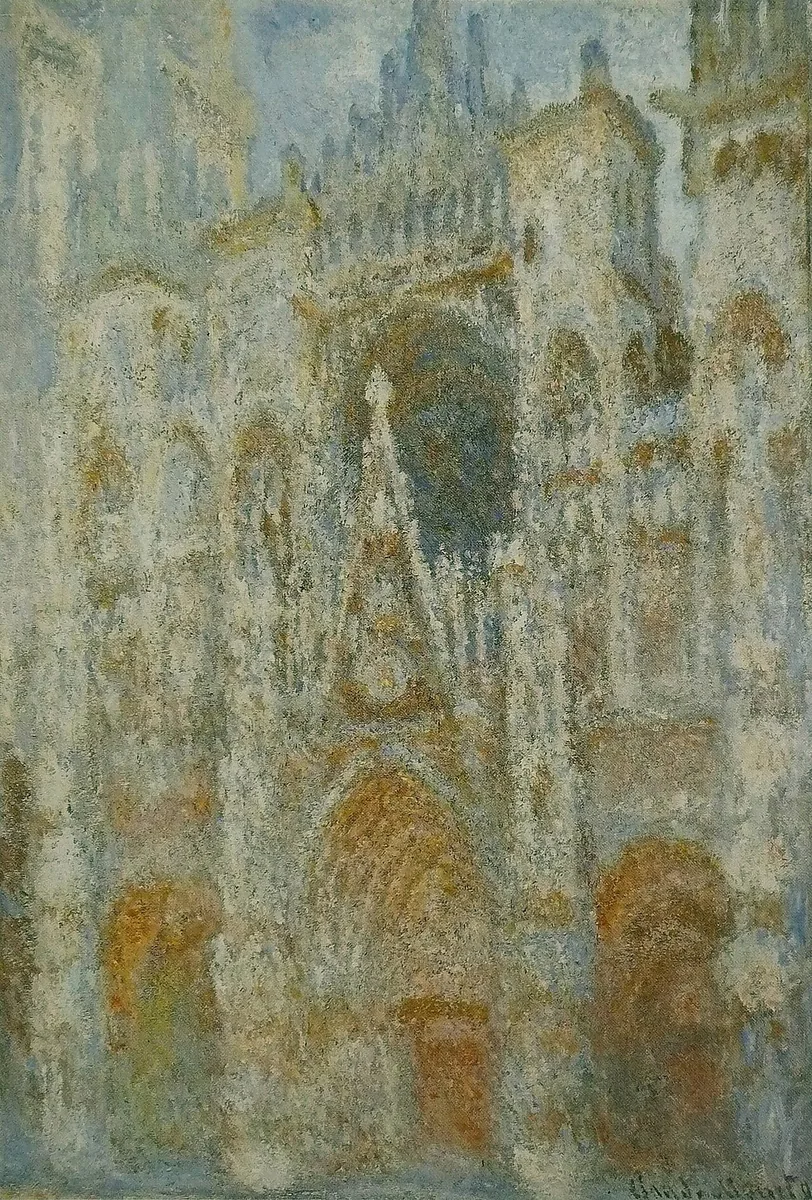
Rouen Cathedral, Façade in Blue
1892 Cathédrale de Rouen, effet de bleu · 鲁昂大教堂·蓝调 The same façade in early morning haze, where the stone reads as blue and the carved detail nearly disappears. Of the Rouen series, these blue versions are the ones that come closest to abstraction. Musée d'Orsay, Paris · 2 printsPoplars
A row of trees along the Epte. · 2 works
Poplars on the Epte
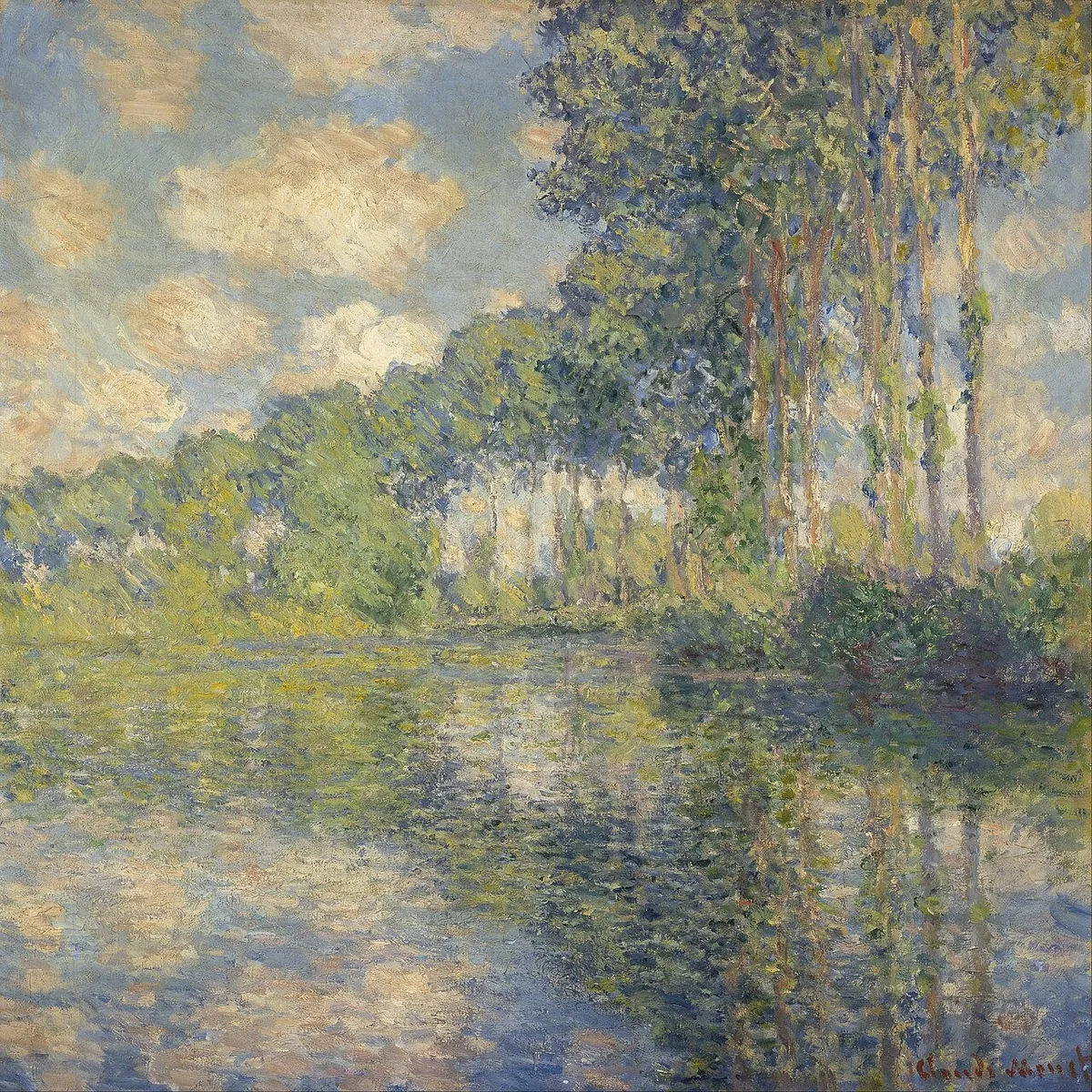
1891 Peupliers sur l'Epte · 埃普特河畔的白杨 Monet paid a timber merchant to delay felling a row of poplars so he could finish the series, then followed the trees down the river in a boat with his easel. The S-curve of the river is the actual subject. Tate, London · 2 prints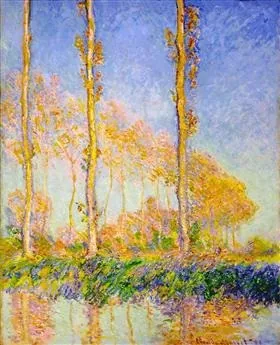
Poplars, Autumn
1891 Peupliers en automne · 秋日白杨 The poplars in autumn, with the river bending through the middle of the canvas. The vertical trunks and the horizontal water give the picture a structure that the summer versions do not have. Philadelphia Museum of Art · 2 printsThe Garden at Giverny
Irises, the footbridge, the path. · 4 works
Poppy Field
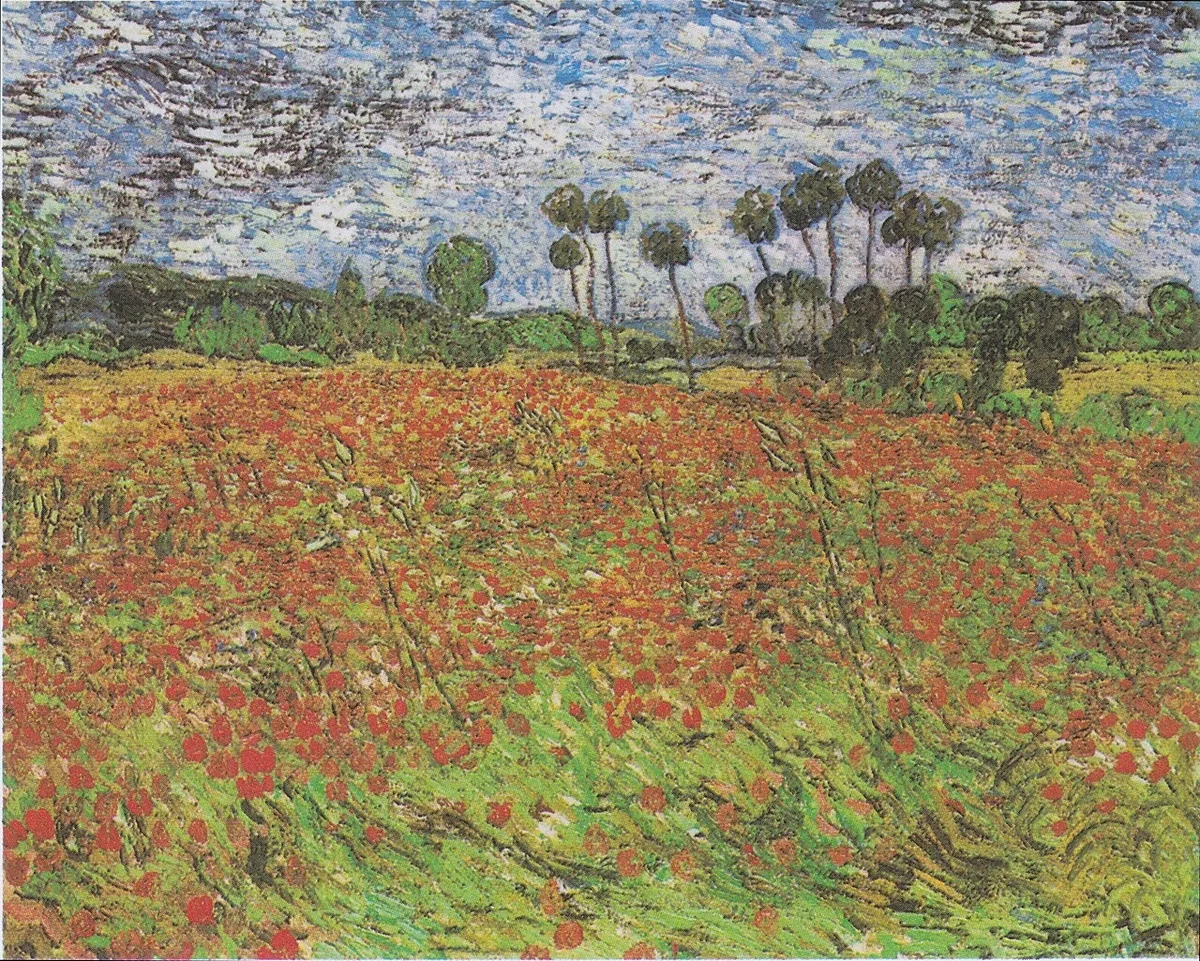
1873 Coquelicots · 罂粟花田 A field of poppies near Argenteuil, with a woman and child in the foreground and the same pair repeated further up the slope. The repetition reads almost like a film cut, and it is one of the earliest pictures to treat a landscape as a passing moment rather than a place. Musée d'Orsay, Paris · 2 prints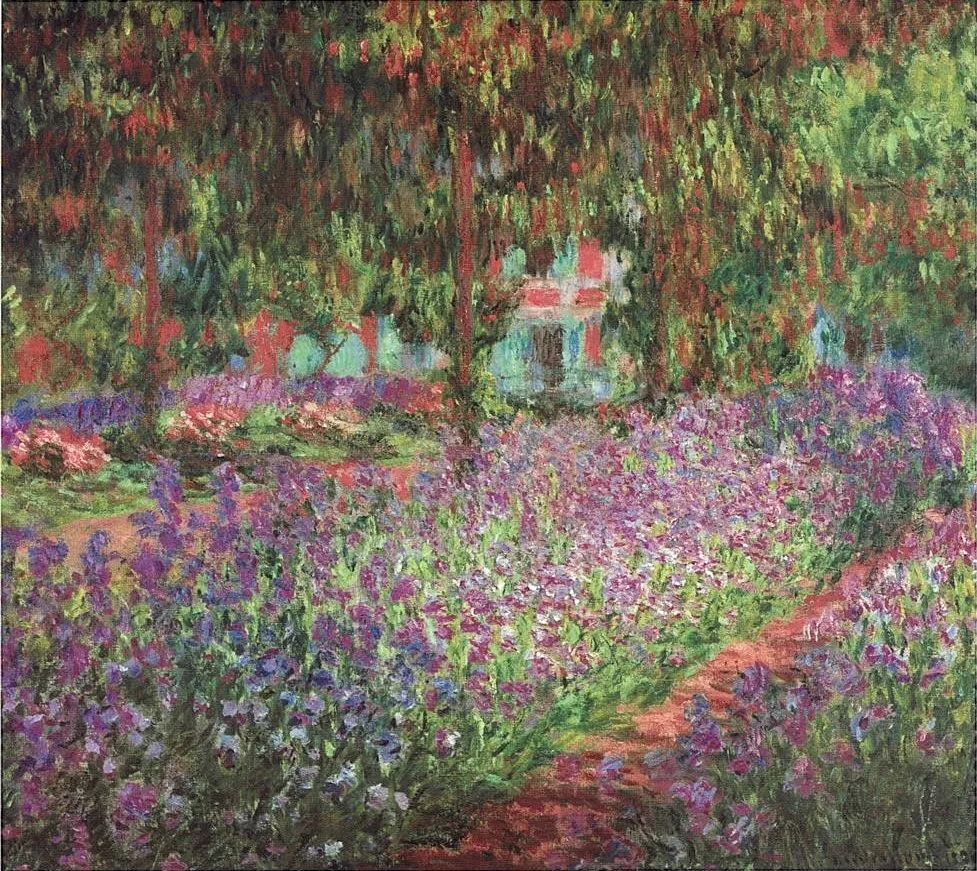
The Artist's Garden at Giverny
1900 Le Jardin de l'artiste à Giverny · 吉维尼的花园 The flower garden in front of the house, with the path running diagonally through it. Monet designed and planted this garden himself, and by 1900 it existed largely to be painted. Musée d'Orsay, Paris · 2 prints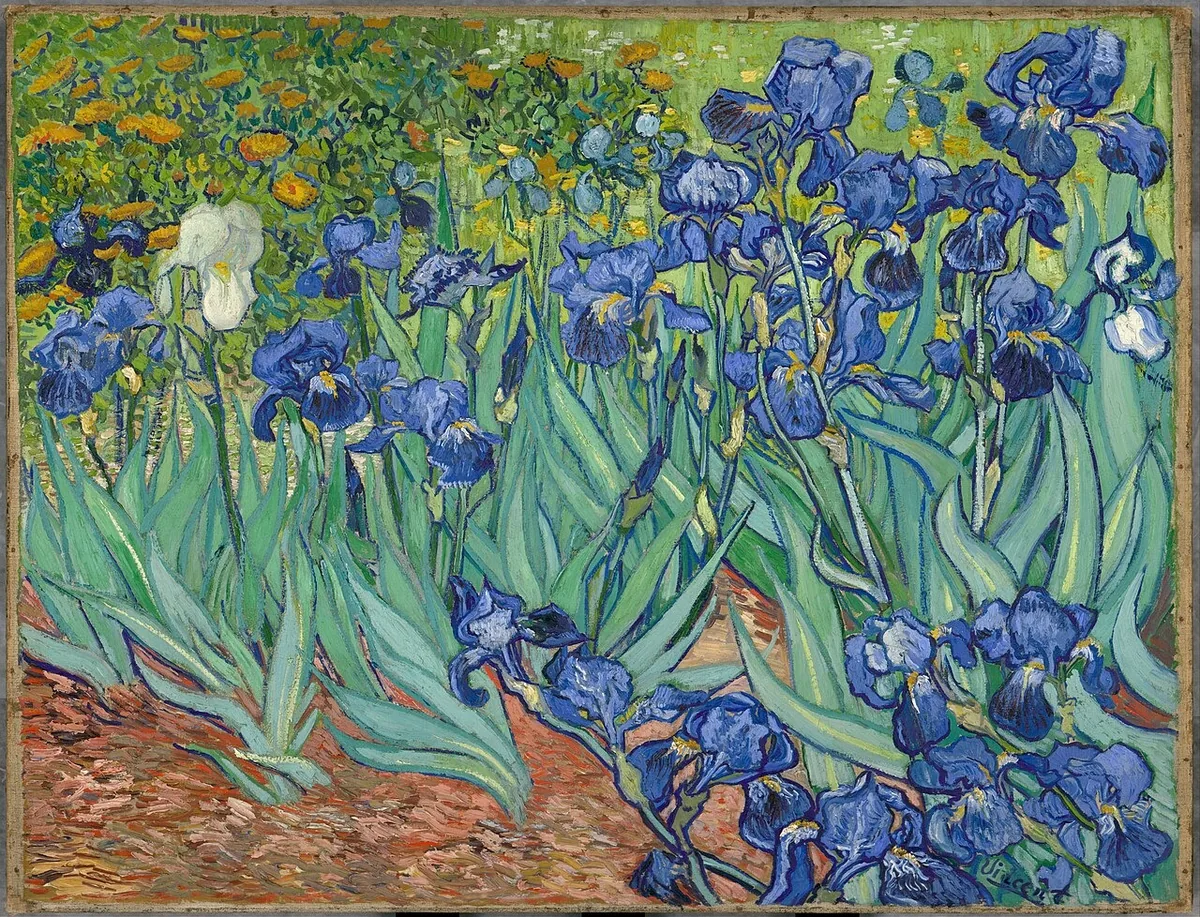
Irises
1917 Iris · 鸢尾花 Nearly square and roughly two metres across, this is one of the late works in which the pond, the flowers and the reflections stop resolving into separate things. It was still in the studio when Monet died. Art Institute of Chicago · 2 prints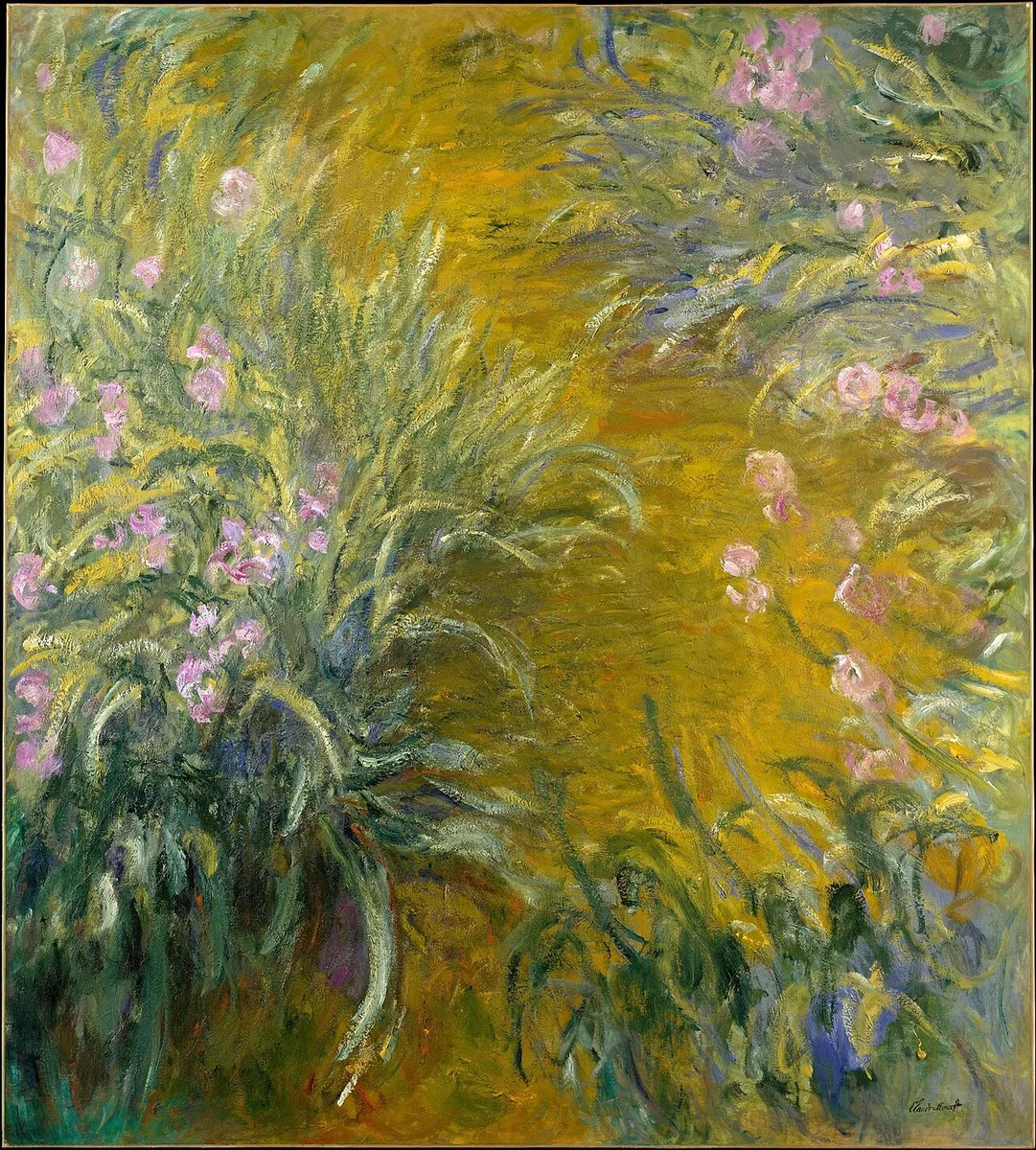
The Path through the Irises
1917 Le Chemin dans les iris · 鸢尾花小径 A bird's-eye view of a path between banks of irises, painted during the First World War when Monet was working at a scale far larger than anything he had attempted before. The brushwork is loose to the point of violence. The Metropolitan Museum of Art, New York · 2 printsFigures & Portraits
Before the landscapes, there were people. · 3 works
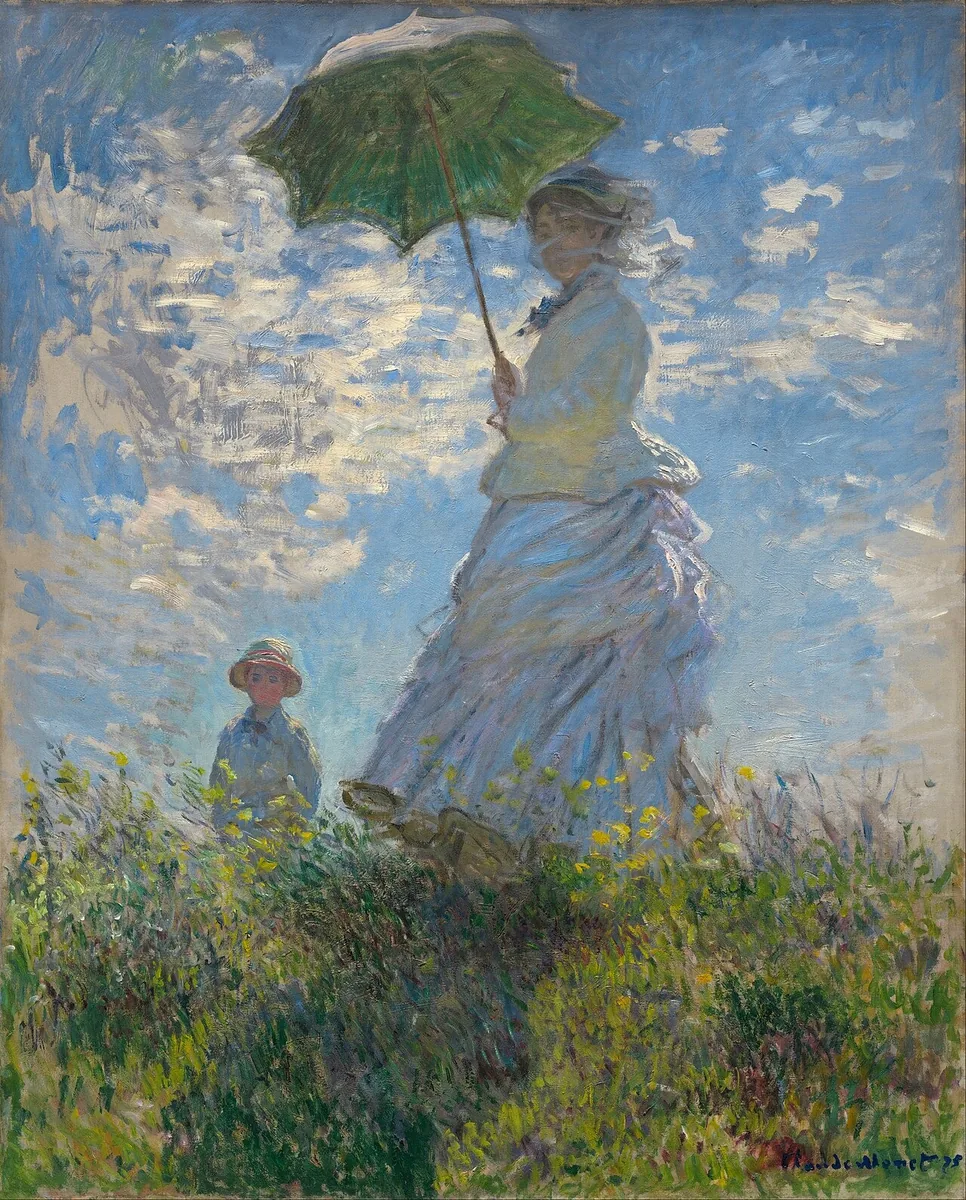
Woman with a Parasol — Madame Monet and Her Son
1875 La Femme au parasol · 撑阳伞的女人 Monet painted his wife Camille and their son Jean on a hill above Argenteuil on a breezy summer day. The low viewpoint puts the viewer in the grass, looking up into a sky that takes up most of the canvas. National Gallery of Art, Washington · 2 prints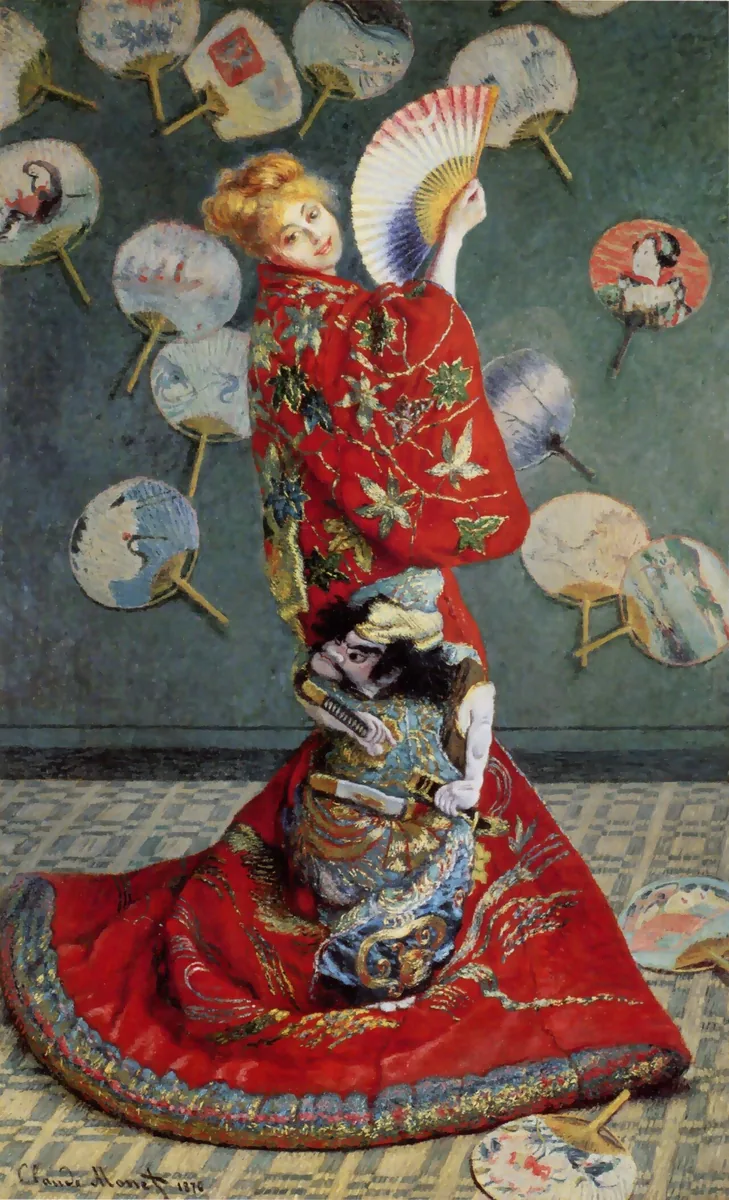
La Japonaise (Camille Monet in Japanese Costume)
1876 La Japonaise · 穿和服的卡米尔 Camille wears a red kimono embroidered with a samurai and holds a fan; the wall behind her is a fan shop's worth of ukiyo-e prints. Monet made the picture to ride the japonisme fashion of the 1870s, and it worked — it was a hit at the second Impressionist exhibition. Museum of Fine Arts, Boston · 2 prints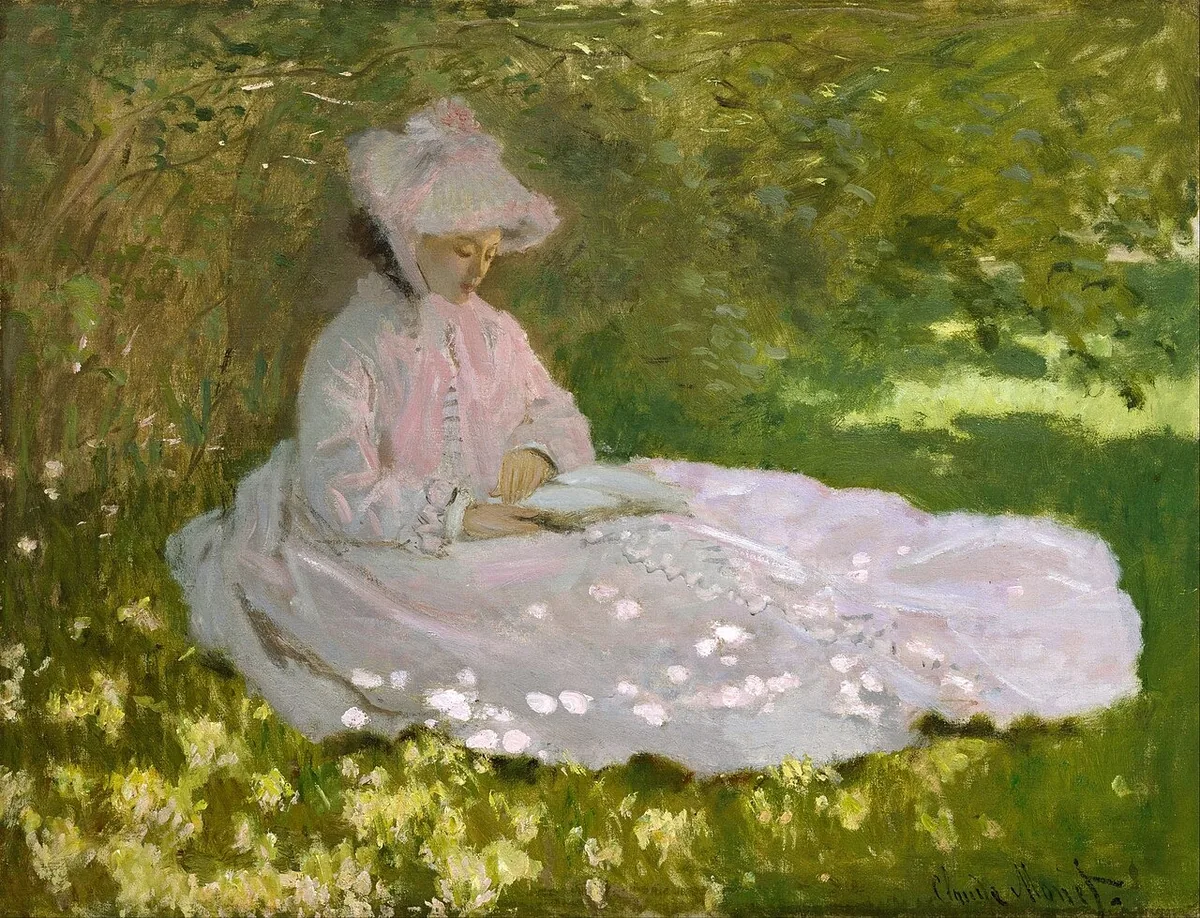
Springtime
1872 Printemps · 春天 A woman sits under a lilac tree in a garden, reading, with the light coming through the blossom. The figure is almost incidental; the picture is about the ten minutes when the lilacs are at their peak. Walters Art Museum, Baltimore · 2 printsCoast & Sea
Étretat, Pourville, Le Havre. · 5 works
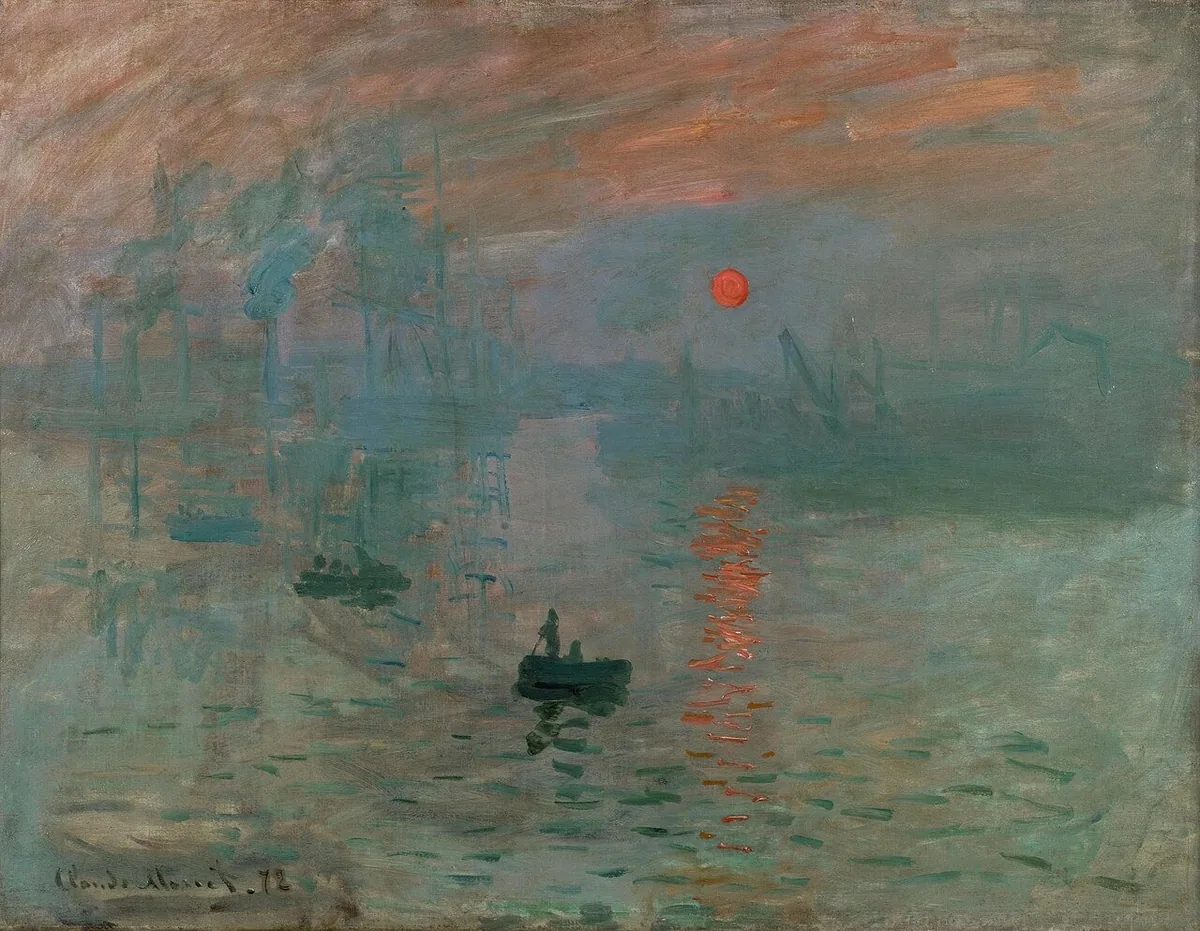
Impression, Sunrise
1872 Impression, soleil levant · 日出·印象 Painted from a hotel window over the harbour at Le Havre, the picture was shown in the first Impressionist exhibition of 1874. Critic Louis Leroy seized on its title for a mocking review, and the insult became the name of the movement. Musée Marmottan Monet, Paris · 2 prints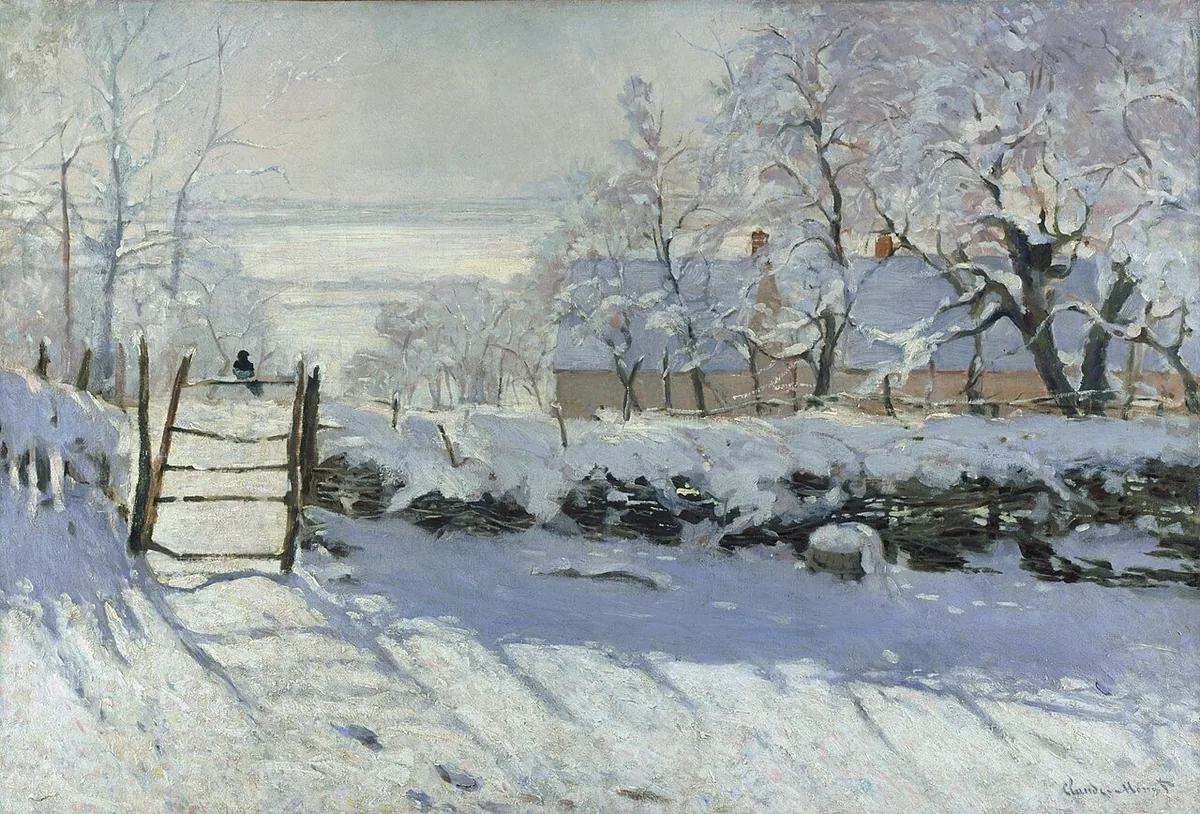
The Magpie
1868 La Pie · 喜鹊 A single black bird sits on a wattle fence in a snowbound Normandy landscape, and the whole picture is really about how snow is not white. Monet paints the shadows blue and lilac, which was unusual enough in 1868 that the jury of the Salon rejected it. Musée d'Orsay, Paris · 2 prints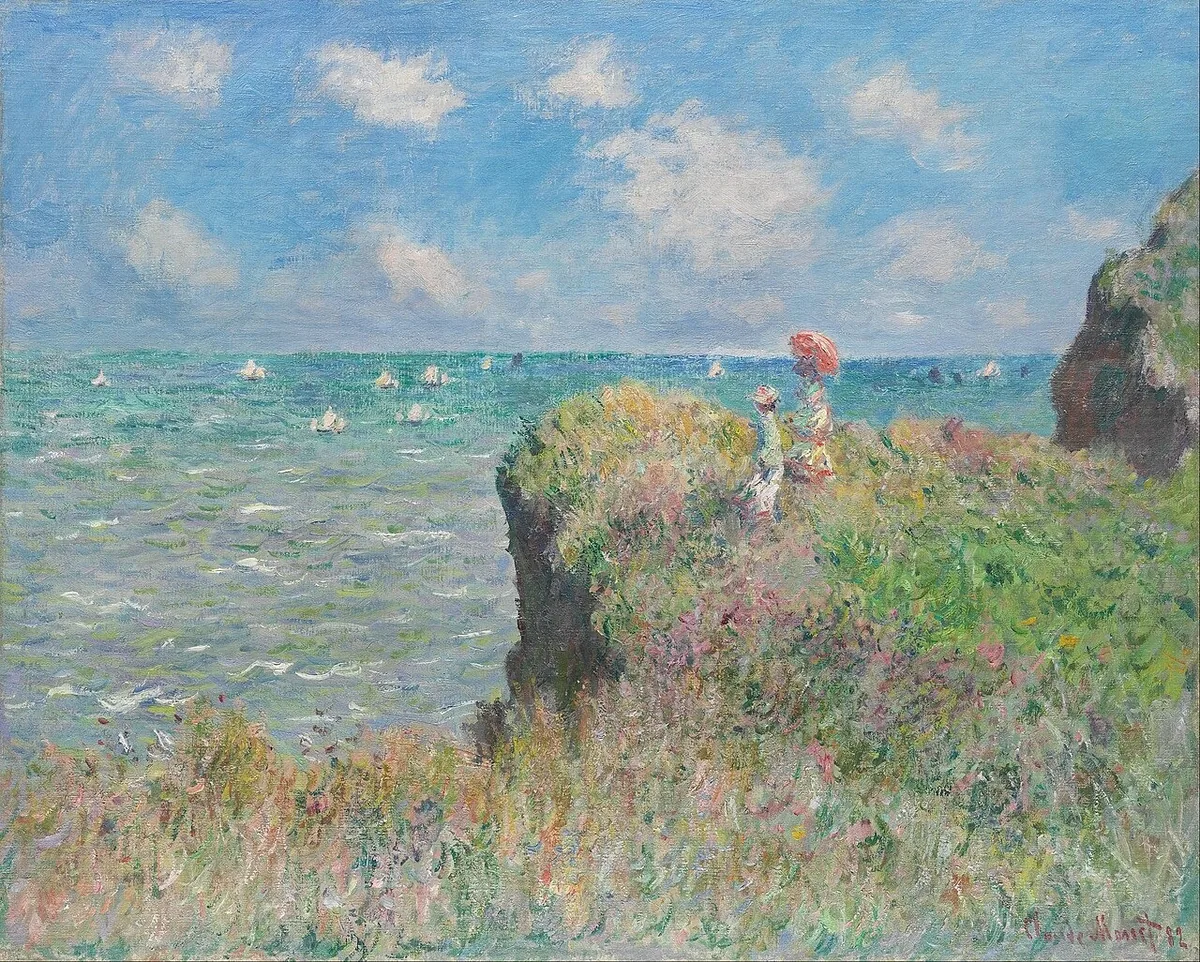
Cliff Walk at Pourville
1882 La Promenade sur la falaise · 普尔维尔悬崖漫步 Two women stand on the cliff path above the sea at Pourville, and the whole composition is really about wind. The grass, the dresses and the water all lean in the same direction. Art Institute of Chicago · 2 prints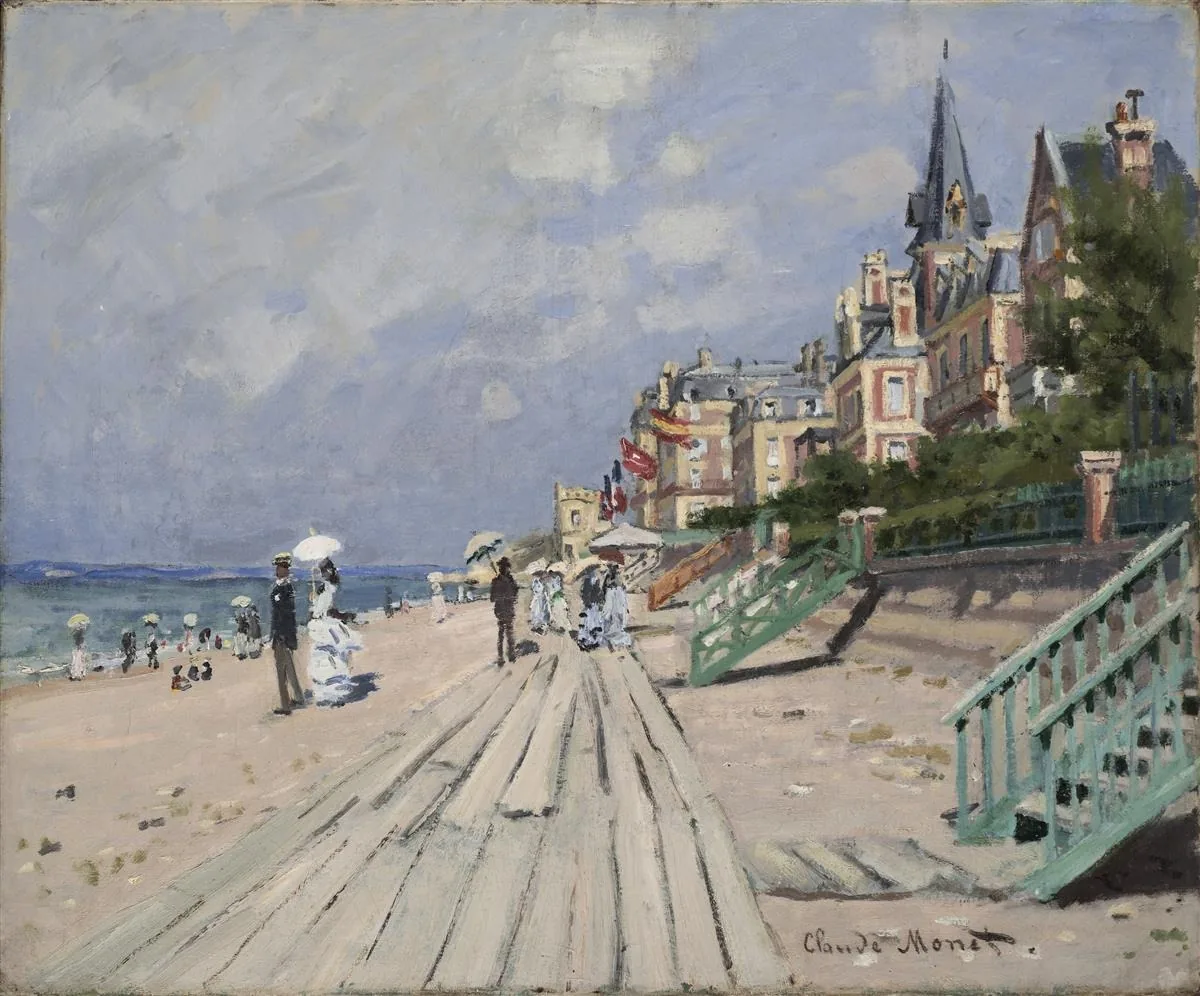
Beach at Trouville
1870 La Plage de Trouville · 特鲁维尔海滩 Painted on the Normandy coast during the Franco-Prussian War, with the beach almost empty and the hotel strip in the background. It is one of the earliest pictures in which a holiday crowd is treated as a subject in its own right. Wadsworth Atheneum, Hartford · 2 prints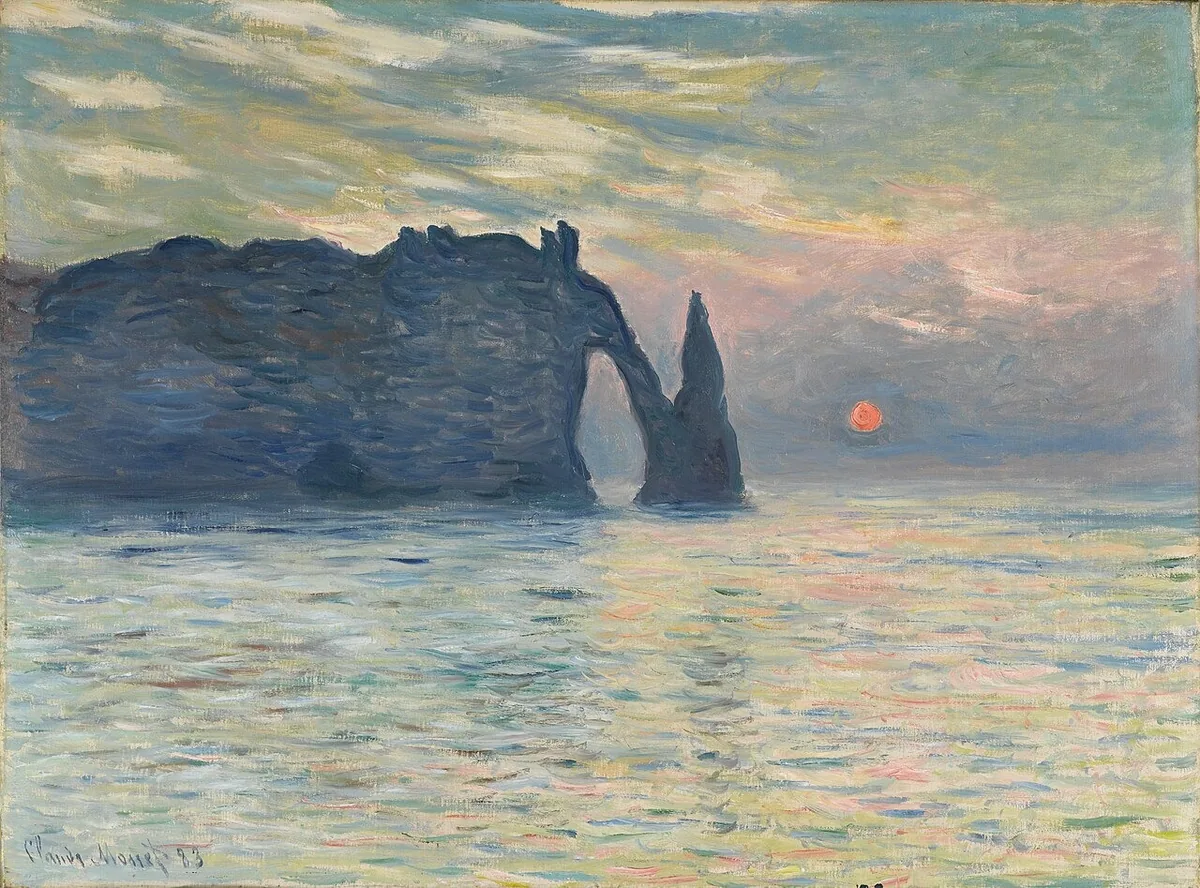
The Cliff, Étretat, Sunset
1883 Falaises d'Étretat · 埃特勒塔悬崖日落 The chalk arch at Étretat at the moment the sun drops behind it, with the sea already in shadow. Monet returned to this coastline repeatedly because the light changed faster than he could paint it. North Carolina Museum of Art · 2 printsParis & the City
Boulevards, stations, smoke. · 3 works
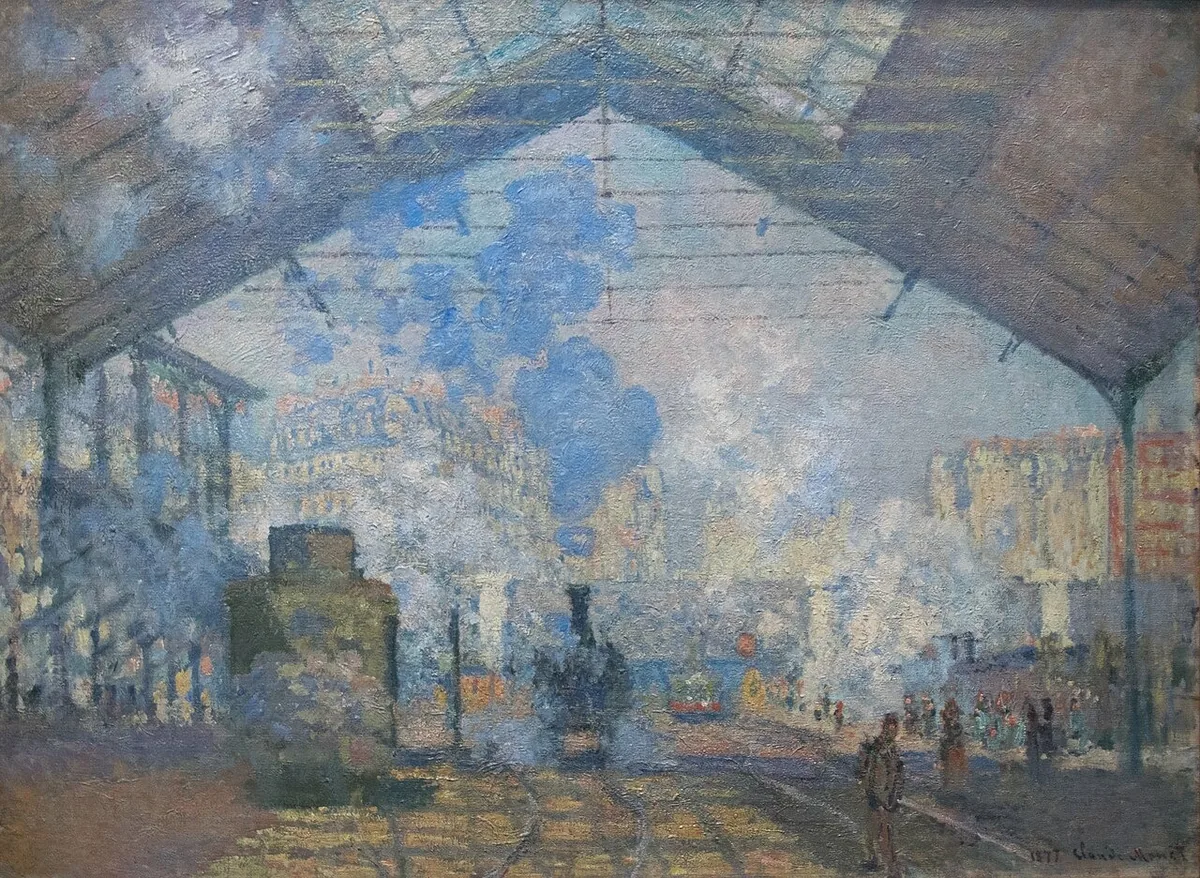
Gare Saint-Lazare
1877 La Gare Saint-Lazare · 圣拉扎尔火车站 Monet rented a flat next to the station and painted the trains, the glass roof and the steam as a study of light passing through something solid. He showed seven of the series together in 1877, the first time an artist had exhibited a single motif as a set of variations. Musée d'Orsay, Paris · 2 prints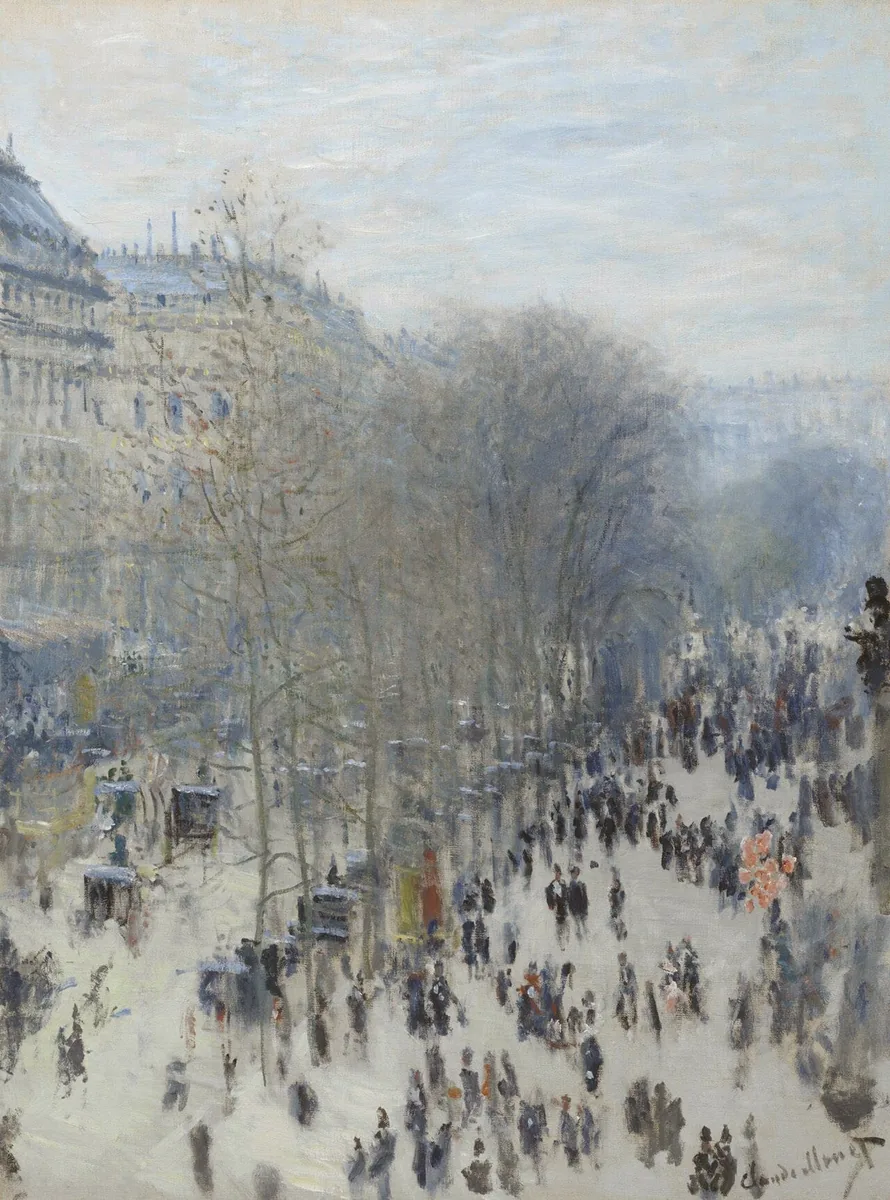
Boulevard des Capucines
1873 Boulevard des Capucines · 卡普辛大道 Monet painted the view from Nadar's studio, where the first Impressionist exhibition would later be held. The crowd on the pavement is reduced to a few dozen quick dabs of dark paint, and from close up the picture almost dissolves. Nelson-Atkins Museum of Art, Kansas City · 2 prints